Guide Supports State Water Reuse Regulations
State water reuse regulations guide supports utilities and regulators developing frameworks for potable and non-potable reuse.
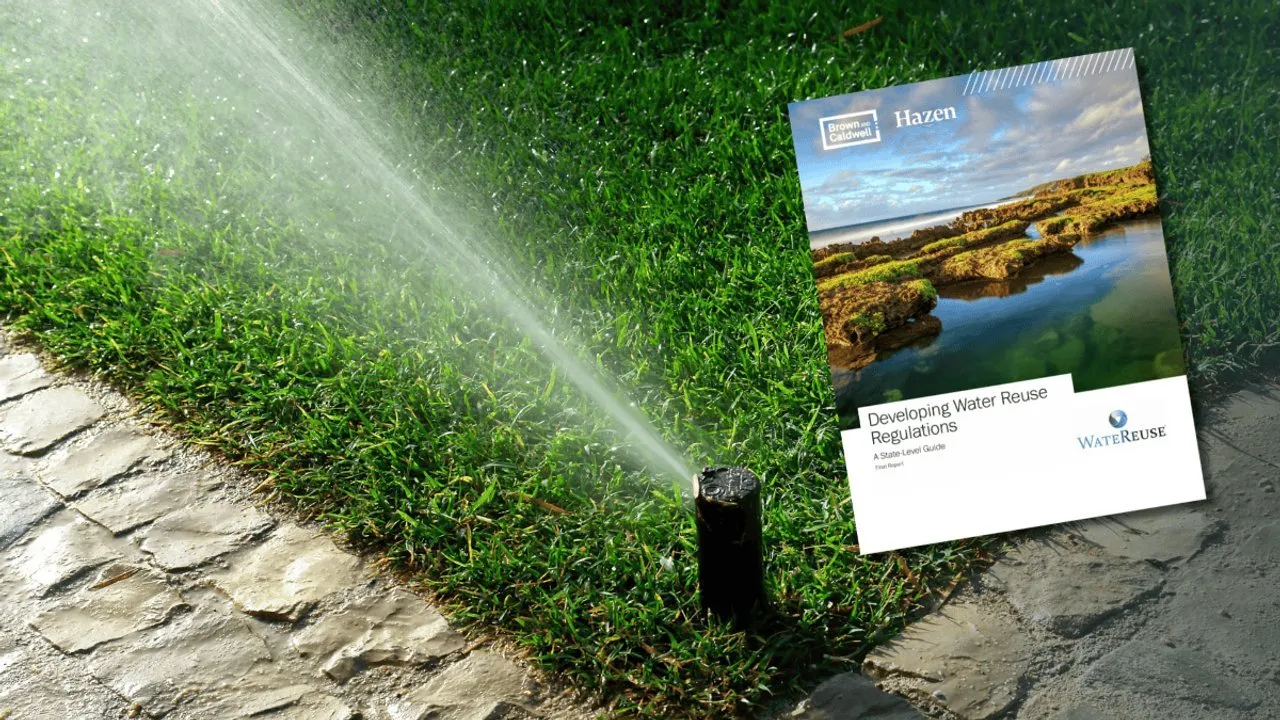
The Water Environment Federation, WateReuse Association, American Water Works Association, Association of Metropolitan Water Agencies, and National Association of Clean Water Agencies have published a guide to help states develop water reuse regulations. The guide addresses both non-potable and potable reuse, with applications including landscape irrigation, environmental restoration, industrial use, and drinking water supplies. Expanded reuse has up to $18 billion in annual value within the $47 billion in overall value available from a fully implemented circular water economy. It is intended to support practical regulations and governance structures as states respond to drought risks, industrial development, and water quality needs.
Addressing Regulatory Uncertainty
There are no federal regulations governing either non-potable or potable water reuse applications. The Clean Water Act and Safe Drinking Water Act can provide a starting point, but states seeking to expand reuse need to develop regulations and governance frameworks for different applications.
The U.S. Environmental Protection Agency catalogs available state requirements through its Regulations and End-Use Specifications Explorer. The tool helps utilities and practitioners understand current state practices, but is not intended to guide states developing regulations for the first time.
States with existing regulations may also revisit them as new non-potable uses emerge, interest in potable reuse grows, or new science and information calls for updates. Without practical regulatory frameworks, reuse projects can remain in the conceptual phase.
Guidance for Rulemaking
Brown and Caldwell led the guide’s technical team in collaboration with Hazen and Sawyer. A technical advisory committee of utilities, regulators, and practitioners reviewed the work, including Dr. Zeynep Erdal, chair of WEF’s Water Reuse Community.
The resource covers reuse applications, public health benchmarks, source water characterization, water quality targets, treatment requirements, monitoring and reporting, and institutional capacity. It identifies decision points and information intended to support sound science and implementation.
Collaboration for Reuse
The guide is designed to give readers with varying levels of water reuse knowledge a common foundation for discussions between stakeholders and decisionmakers. State environmental agencies frequently seek water-sector and public-health expertise during rulemaking to help ensure regulations are practical while protecting public health and the environment.
Its approach recognizes that requirements can differ by regional conditions and applications. Agricultural irrigation, for example, may receive greater attention in states with robust agriculture industries.
Circular Water Economy
WEF is connecting the guide to its circular water economy initiative. Members can also participate through the Water Reuse Community, which shares resources and experiences through workshops, technical outreach, and focus groups.
An Upper Mississippi River Basin Focus Group recently published a Reuse Rulemaking Roadmap for the Great Lakes and Mississippi River Basin. WEF is working with partner organizations to expand reuse opportunities through its events, educational programming, and member communities.