WaterWallX: A Proposal for Wildfire Resilience
A Q&A with Faizan Mufti on WaterWallX, an unbuilt and untested concept for wildfire resilience, and what would need testing before any performance claim.
Status: Concept stage proposal. WaterWallX is unbuilt and untested. No performance results have been validated.
Personal interest disclosure: I created WaterWallX and have a direct interest in its development. Coverage could benefit me by increasing awareness of the project or creating future opportunities.
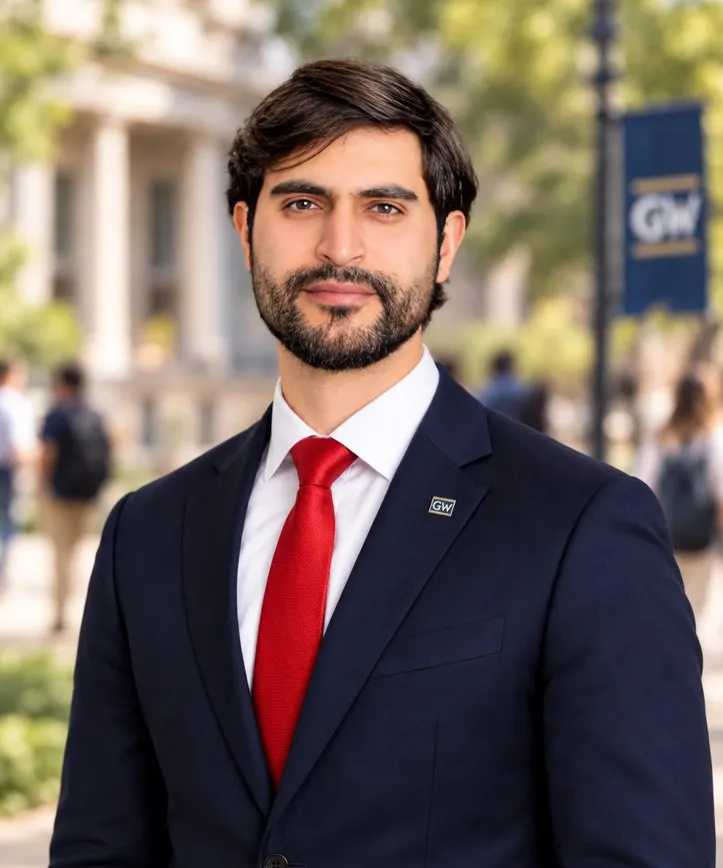
Portrait of Faizan Mufti. Supplied by the author with permission to share.
Who are you, and what is your role in WaterWallX?
I’m Faizan Mufti, the originator of WaterWallX. I developed it as a graduate capstone concept in engineering management and systems engineering at The George Washington University. My work has been to shape the initial system architecture and ask how wildfire detection, water delivery, resilient power, clean air, and wildlife movement might be considered together. That is a role in developing a proposal, not a claim of deployment. WaterWallX has not been built or tested, and no performance results have been validated.
What is WaterWallX intended to do, and how did you develop the idea?
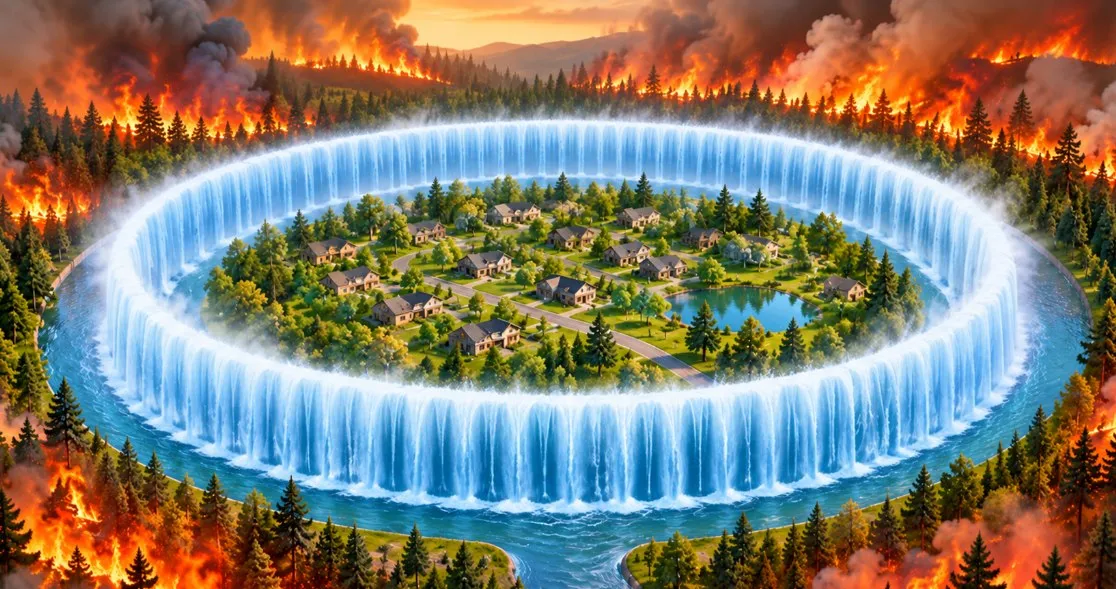
The first question was a systems question: what would it take to prepare a community before fire reaches its edge? WaterWallX explores a coordinated proposal that links early detection to a network that uses water for suppression, with backup power, clean air support, and wildlife passage considered alongside it. In one concept, sensors would send a signal to pumps and nozzles around a community; the water source and any recirculation would depend on local conditions and approval. The idea emerged through engineering management and systems engineering capstone work. It is a design proposition. No test has shown that the proposed water curtain can stop a wildfire.
Illustrative concept only. Not to scale. Not an engineering design or evidence of performance.
What water sources might be considered, and how would local needs shape the choice?
Water is not a background detail; it determines whether the concept is locally responsible. Project materials consider ocean water in coastal locations and recycled or recirculated water, but no source has been selected, permitted, or shown to be suitable. A site study would need to map household and emergency demand, drought conditions, utility capacity, water rights, treatment and energy needs, and possible effects on rivers, wetlands, coastlines, and wildlife. Residents and resource managers would have to weigh those needs together. WaterWallX assumes no community has surplus water to spare; the source would have to be determined site by site.
Which agencies, communities, and partners would need to be involved?
That work starts with people who live with the risks and the infrastructure. Residents, local governments, and tribal governments should shape the goals, competing needs, evacuation planning, and measures of success from the outset. Depending on a proposed site, consultation could also involve local fire and emergency managers, water utilities, land use and building officials, environmental and wildlife agencies, and coastal or water rights regulators. Independent engineers, fire scientists, ecologists, public health specialists, and university teams could review the work. These are people and bodies that a future study might need to consult, not current partners, endorsements, or confirmed approvals.
What testing would be needed before making performance claims?
Before any performance claim, we would need to define the use case, hazards, and comparison baseline with fire professionals and affected communities. Independent engineering review should examine demand, hydraulics, wind and ember exposure, corrosion, energy needs, and failure modes. Controlled tests would measure nozzle behavior and heat exposure; detection trials would record missed detections, false alarms, and response times across conditions. The work would also test manual override, safety, communications, cybersecurity, and power or network loss. Ecologists and wildlife specialists would examine habitat effects and animal movement. A permitted field pilot could follow only after transparent results and independent review. No such testing has validated WaterWallX; diagrams and calculations alone cannot establish that it stops fire or protects a community.
What are your plans and goals for the next few years?
Over the next few years, I want to move from an expansive concept toward a question we can answer with evidence. That means reconciling design assumptions that now conflict, choosing a specific setting, and listening early to residents, fire services, water managers, and environmental reviewers. I would pursue independent feasibility work and a safe, permitted path for component tests, then publish methods and results, including results that challenge the idea. Any field pilot would require approvals and a clear comparison with existing practice. The immediate goal is to reduce uncertainty and build informed collaboration; deployment is not a promise.
About Faizan Mufti
Faizan Mufti developed WaterWallX as a graduate capstone concept in engineering management and systems engineering at The George Washington University. He leads its concept development, connecting wildfire resilience with questions of water infrastructure, energy continuity, and community planning. WaterWallX remains unbuilt and untested, with no validated performance results.
LinkedIn profile | https://www.waterwallx.com/