Trase Maps Water Risks in Brazilian Soy and Beef
Water scarcity risks in Brazilian beef and soy supply chains are mapped by Trase, linking traders to drought and stressed river basins.
Trase has mapped water scarcity risks across Brazilian soy and beef supply chains used by major commodity traders. Its new report finds that top soy traders are linked to regions with a high probability of drought, while leading beef traders depend heavily on river basins facing high or critical water scarcity. The analysis connects water use in production with supply-chain data to show where traders rely on Brazilian water resources. It also examines how water scarcity and deforestation risks can overlap in sourcing decisions.
Water Risks Across Supply Chains
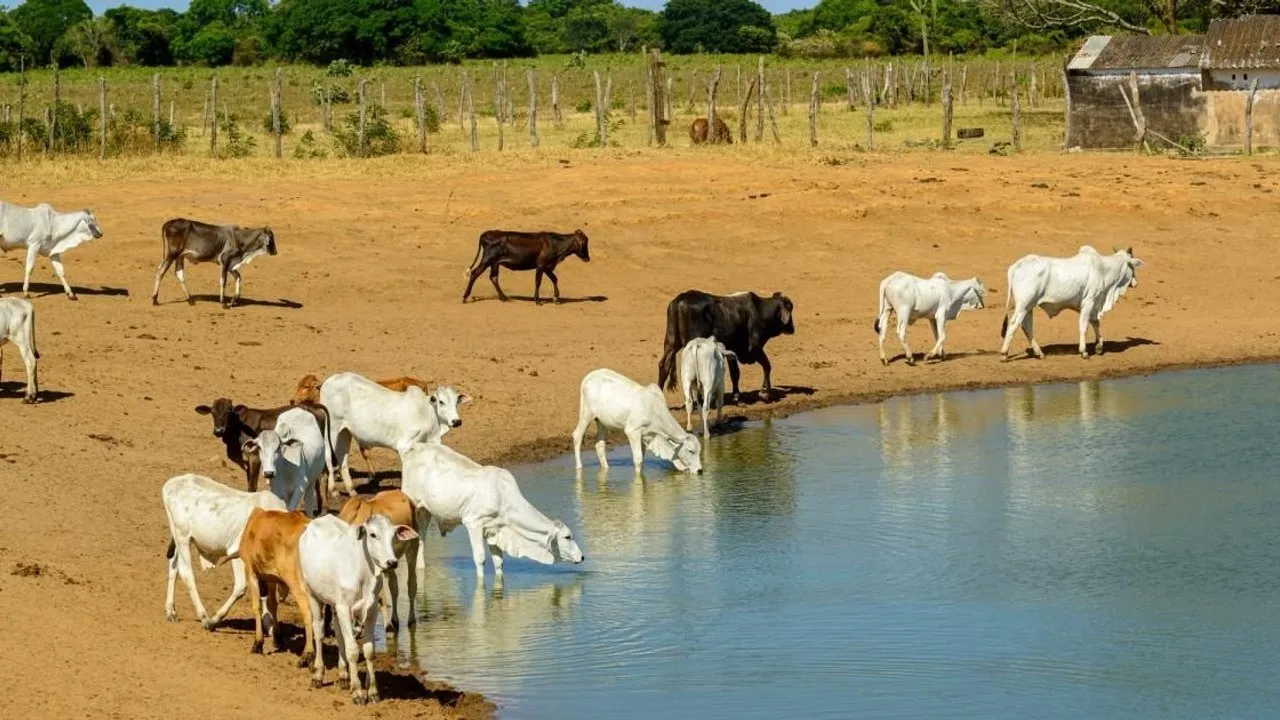
Soy production in Brazil relies primarily on rainfall, with surface water and groundwater also used for irrigation. Beef production depends on drinking water for cattle, typically stored in small farm reservoirs. Dry spells can reduce rainfed soy yields, while irrigation and livestock water supplies can face competition from business users, households and ecosystems.
The report builds on peer-reviewed research into European and Chinese reliance on Brazil’s water through soy and beef imports. Its findings point to water risks that are often not accounted for by companies monitoring only withdrawals and discharges from their own operations.
Western Bahia Water Losses
In Western Bahia, within the Matopiba agricultural frontier, participatory mapping by local organizations found that more than 7,000 kilometers of rivers and streams no longer flow year-round. The mapping links these losses to deforestation, expanding crop irrigation and unchecked water extraction.
Watercourses that once flowed reliably now appear only after heavy rain, while reservoirs built for livestock or energy generation can lose supplies through evaporation. The report identifies risks for food security, traditional livelihoods and cultural identity among communities dependent on freshwater ecosystems.
Targets And Better Data
The research supports the Fair Water Footprints initiative, which seeks to establish water stewardship as an international business norm. The initiative, launched in Glasgow for COP26, is supported by governments, companies, investors and civil society organizations including Water Witness.
Trase recommends that traders extend water accounting to suppliers through scope 3 water targets, alongside existing deforestation and greenhouse gas targets. It points to the Science Based Targets initiative as an example of how companies already set targets in related areas.
The report also calls for Brazil’s water, agricultural and environmental agencies to better coordinate deforestation control, irrigation management and drought adaptation. It recommends improved datasets on annual water balances, farm reservoirs and water allocation permits to support annual risk assessments.
Next Water Use Metrics
Trase plans to provide revised water-use metrics for global agricultural commodity trade through the Global Environmental Impacts of Consumption Indicator. The work is intended to support updated assessments of water use in consumption activities and related supply chains.
The organization has also published its report, Uncovering Trader Water Reliance and Risks in Brazilian Soy and Beef Supply Chains, and a dataset connecting soy and beef supply-chain data with water use, deforestation and greenhouse gas emissions. The underlying research was published in Communications Earth & Environment.