Culligan Ranks Water Quality in 50 College Towns
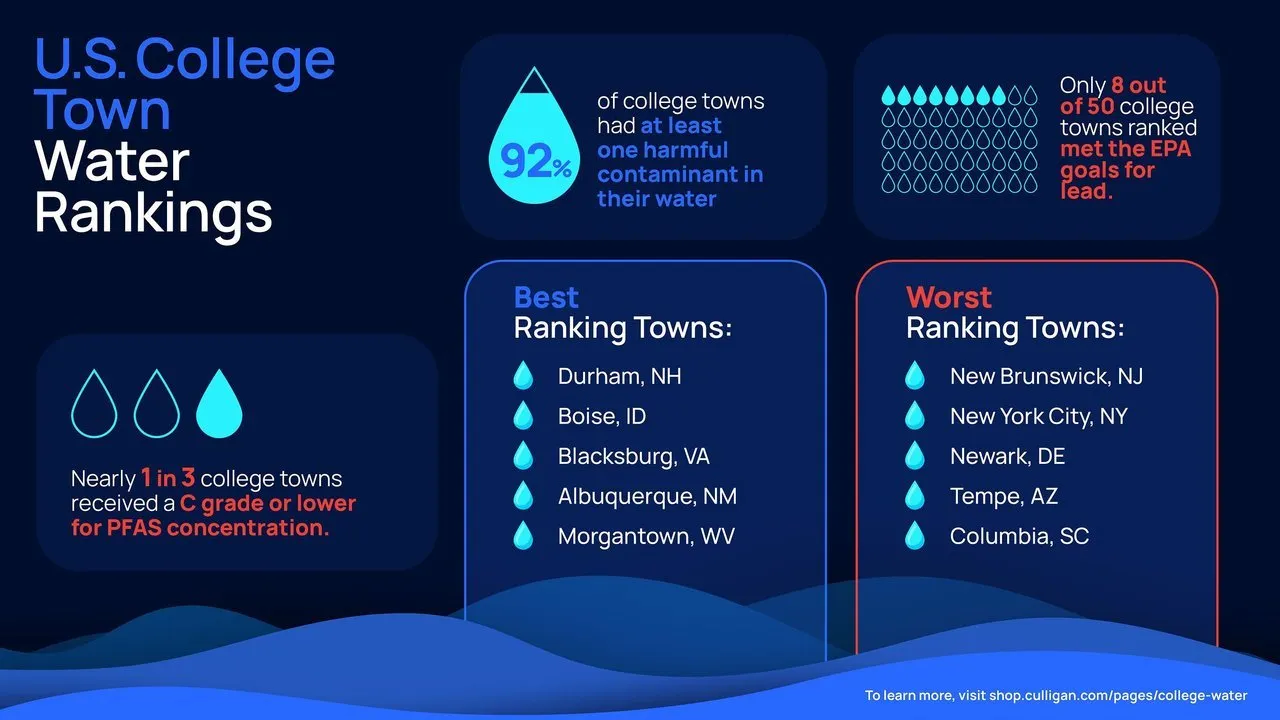
College town water quality rankings from Culligan found 92% of 50 U.S. college towns had at least one harmful contaminant.
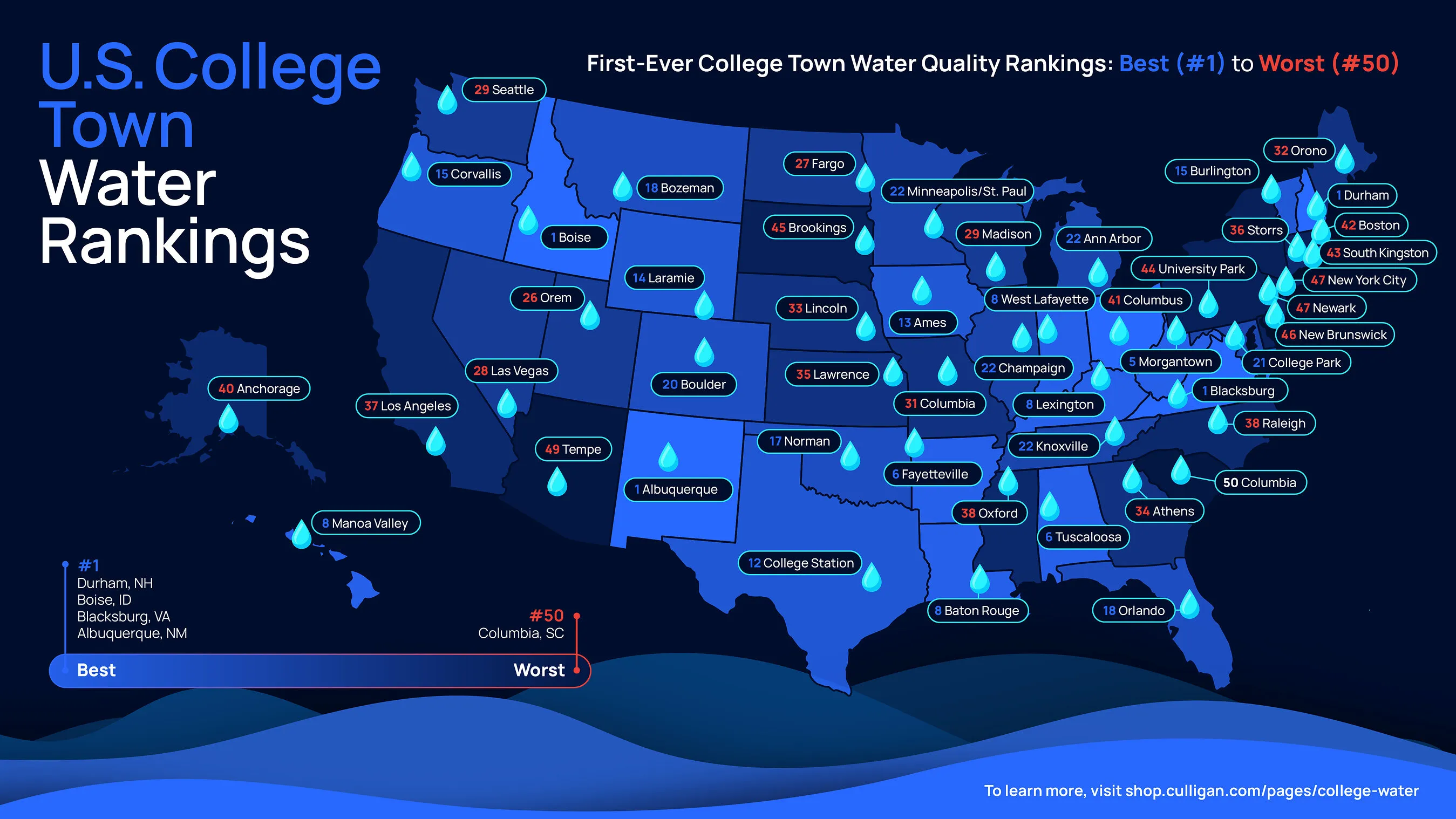
Culligan with ZeroWater Technology has ranked 50 U.S. college towns for drinking water quality, finding that 92% had at least one harmful contaminant present in tap water. Only eight towns had water that met U.S. Environmental Protection Agency lead level regulations, while nearly one in three received a C grade or lower for PFAS concentration. The analysis scored lead and five PFAS chemicals using publicly available water data. Culligan released the rankings as students prepare to return to campus this fall.
Highest And Lowest Ranked Towns
Morgantown, West Virginia; Albuquerque, New Mexico; Blacksburg, Virginia; Boise, Idaho; and Durham, New Hampshire, were the five highest-ranked towns in the analysis. The five lowest-ranked locations were Columbia, South Carolina; Tempe, Arizona; Newark, Delaware; New York City, New York; and New Brunswick, New Jersey.
New York City ranked among the lowest-performing college towns and was the only location to receive an F grade for lead concentration. Culligan cited the variables affecting water quality before it reaches consumers, including aging infrastructure common in large cities.
Julia Reardon, vice president, marketing at Culligan, said:
“When students start college, many also start making independent health decisions for the first time, and water quality isn't something they easily understand, or know how to evaluate. Our goal is to empower students to take greater control of this often overlooked but important aspect of their health.”
Lead And PFAS Scoring
Culligan ZeroWater analyzed publicly available water quality data for 50 college towns. The towns were identified using the largest university in each state by graduate and undergraduate hybrid enrollment, based on 2024 IPEDS data.
Each town received an A through F grade for lead and for five chemicals within the Total PFAS family: PFOS, PFOA, PFHxS, PFNA and HFPO-DA, also known as GenX. Lead and Total PFAS were weighted equally to create a single overall score.
Culligan College Town Water Rankings Data.
Lead scores used the 90th-percentile 10 parts per billion action level in the EPA’s final Lead and Copper Rule Improvements regulation. The release states that exceeding the action level triggers water systems to implement corrosion control measures and notify the public, and that it is not a standard for establishing a safe level of lead.
Lead data came from public water systems’ annual consumer confidence reports. PFAS data came from the EPA’s Fifth Unregulated Contaminant Monitoring Rule, with samples taken between 2023 and 2025.
College Town Rankings
The college town water quality rankings set out Culligan ZeroWater’s results for the 50 locations. The company said filtration solutions certified to reduce contaminants such as lead and Total PFAS can improve water quality regardless of a town’s ranking.